Look Up, Look Down, Look Twice: Ten One-Mile Wanderings Through Ordinary Britain
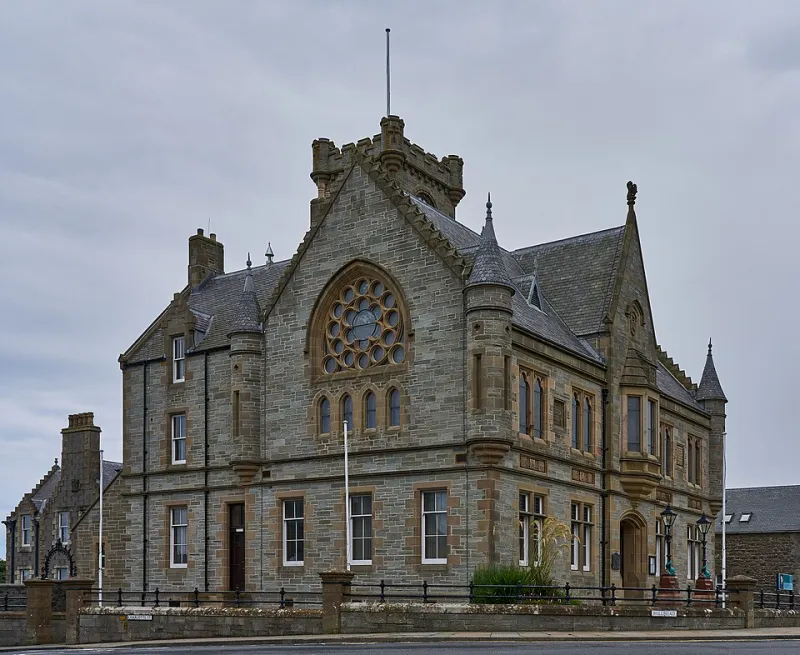
Photo: Jonathan Billinger, CC BY-SA 2.0, via Wikimedia Commons
The best travel discoveries are rarely signposted. They are the things you notice when you stop treating a place as a route from A to B. That is the 1derer premise: see the familiar differently. A one-mile wander is not a hike. It is a deliberate detour, a short loop with a theme, taken at the pace of someone who has nowhere better to be.
The one-mile method
Pick a starting point you already know: a station, a bus stop, a supermarket car park. Walk for half a mile in any direction, then turn and come back by a parallel street. Give yourself three prompts: look up, look down, look twice. Look up for dates, names, rooflines and old lettering. Look down for coal holes, boot scrapers, tram lines, drainage stamps and pavement mosaics. Look twice at anything that seems ordinary, because the second look is where the story usually is.
Carry a phone but keep it in your pocket. A paper map or offline map is better. Most routes below take 30 to 50 minutes at a gentle pace. Best light is early morning or the last hour before dusk, when shadows pick out brickwork and ghost signs. Avoid school run hours if you want quiet pavements.
Ten ordinary places worth a closer look
1. The suburban parade: London Road, Sheffield
Start at the old picture house and walk one mile south along the parade, then return through the back streets. Look for ghost signs above chip shops, original 1930s shopfronts and the odd stone carved with a builder's initials. Best on a Sunday morning, when shutters are down and the architecture gets a chance to speak. Route note: pavements are narrow in places, so keep left and cross at the zebra.
2. The station approach: Crewe
Crewe station is a junction, not a destination, which is exactly why it works. Walk from the main entrance towards the town, loop through the streets behind the Grand Junction, and return along the footbridge. Look up at the railway hotel's stonework and down at the ironwork around the old goods yard. Best at blue hour, when the signals start to glow. Prompt: count how many buildings still have railway names.
3. The ring-road edge: Coventry
Ring roads are usually treated as obstacles. Treat this one as a museum of post-war planning. Start at the transport museum and follow the pedestrian crossings and underpasses for a mile, keeping the ring road on your right. Look for concrete murals, old shop signs and the strange beauty of a city that rebuilt itself. Best on a weekday lunchtime, when the offices empty and the underpasses echo. Stick to signed crossings after dark.
4. The small-town high street: Ludlow, Shropshire
Ludlow is not ordinary, but its everyday high street is. Walk from the Buttercross to the station and back through the side lanes. Look for medieval timbers above modern shopfascias, painted signs for long-gone grocers and the marks of old markets. Best on a Thursday, when the market is quiet but the cafes are open. One mile is enough to pass three centuries.
5. The seafront edge: Bognor Regis
Skip the pier and walk the residential end of the promenade. Start at the bandstand, head west for half a mile, then return through the streets behind the beach huts. Look up at the balconies of Victorian guesthouses and down at the sea-defence stamps. Best at low tide on a bright winter morning. The light is hard and honest, and the town looks like itself.
6. The mill town centre: Accrington, Lancashire
Accrington rewards a close look. Start at the market hall, walk to the viaduct and return via the old weaving sheds. Look for blackened stone, carved keystones and the faded names of co-operative societies. Best on a Saturday morning, when the market is lively. Route note: some pavements are steep; the loop is manageable but not step-free throughout.
7. The modern town fringe: Swindon
The Magic Roundabout is a local joke and a national curiosity. Walk one mile around its edges, using the pedestrian crossings, and notice how the town stitches itself together. Look for public art, old railway housing and the strange poetry of underpass tiles. Best on a dry weekday, outside rush hour. Do not attempt to cross the roundabout itself; use the signed crossings.
8. The old town fringe: Hull
Start at the marina and walk the edge of the Old Town for a mile, returning through the streets behind the waterfront. Look up at warehouse hoists and down at cobbles worn smooth. Look twice at the plaques and doorways that mark old merchants' houses. Best at dusk, when the streetlights come on and the water turns to ink. The route is flat and mostly step-free.
9. The valley high street: Merthyr Tydfil
Merthyr's high street is a lesson in layers. Walk from the bus station to the old ironworks site and back through the side streets. Look for chapel names, industrial memorials and shopfronts that have been three different things. Best on a weekday morning. Route note: the return is uphill, so save energy for the last half mile.
10. The cathedral city edge: Perth, Scotland
Perth's South Inch is a park, but the streets around it are ordinary and full of clues. Walk from the station to the edge of the Inches and return along the canal. Look for Georgian windows, old water mills and the marks of floods. Best in late afternoon, when the light comes low along the Tay. One mile, one river, several centuries.
The repeatable prompt
You do not need this list. Pick the parade, station approach or ring-road edge nearest to you. Set a timer for 30 minutes. Walk half a mile. Turn around. On the way out, look up. On the way back, look down. At the turn, look twice at whatever you first dismissed. Note one thing you would have missed if you had driven. That is the whole practice. The familiar is not boring; it is just badly lit by habit.